Like @katejsim, I also find interesting co-occurrences when filtering the graph to k=4. For those unfamiliar with our tool, Graph Ryder, this means that we are looking the connections between codes that have been mentioned together by community members at least 4 times.
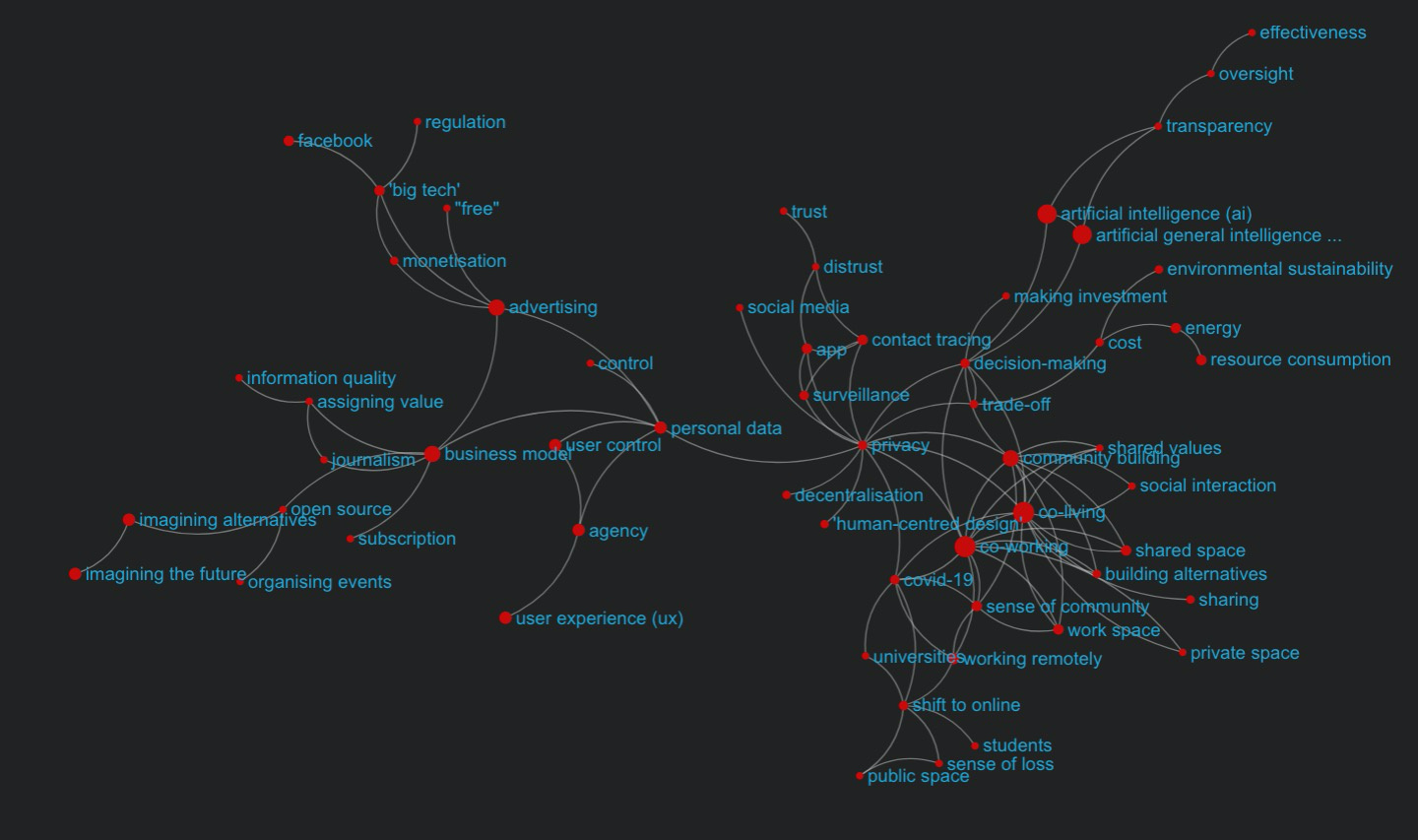
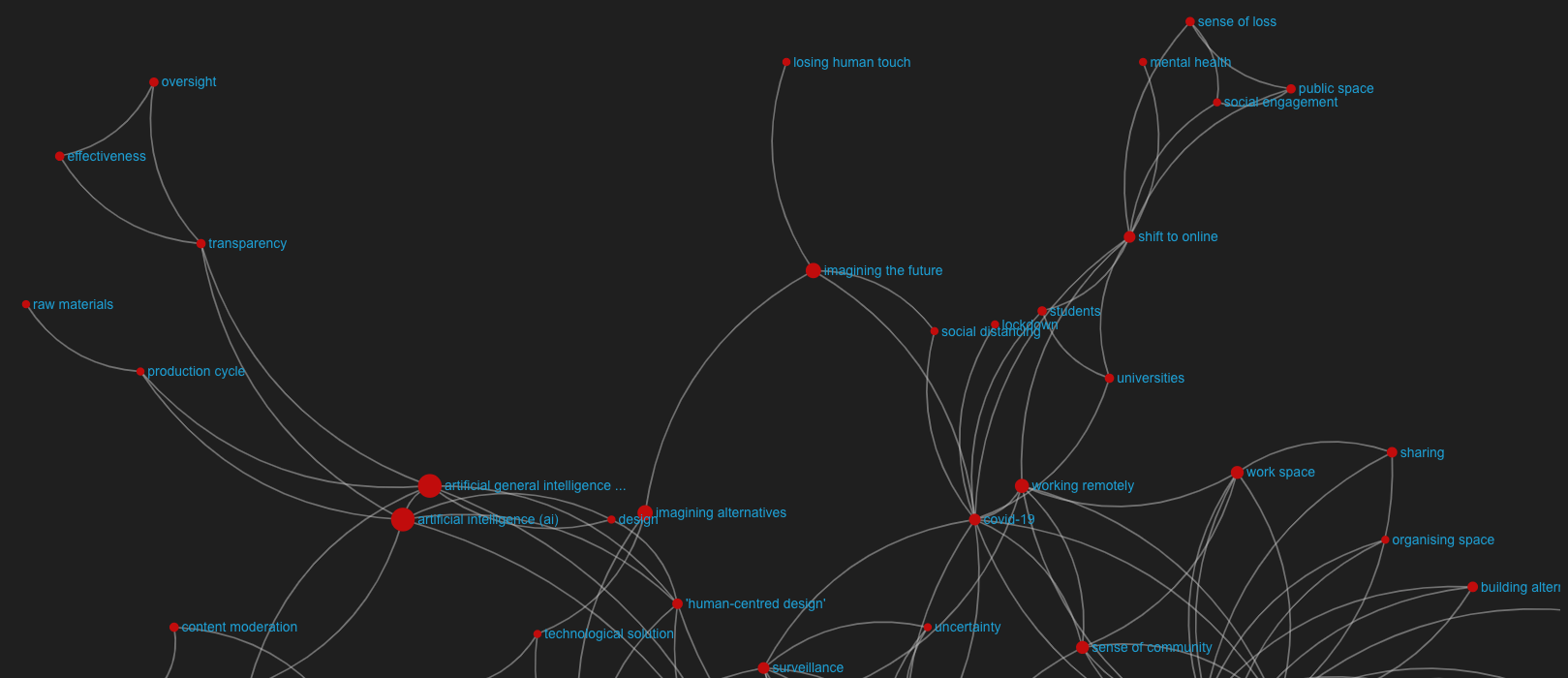
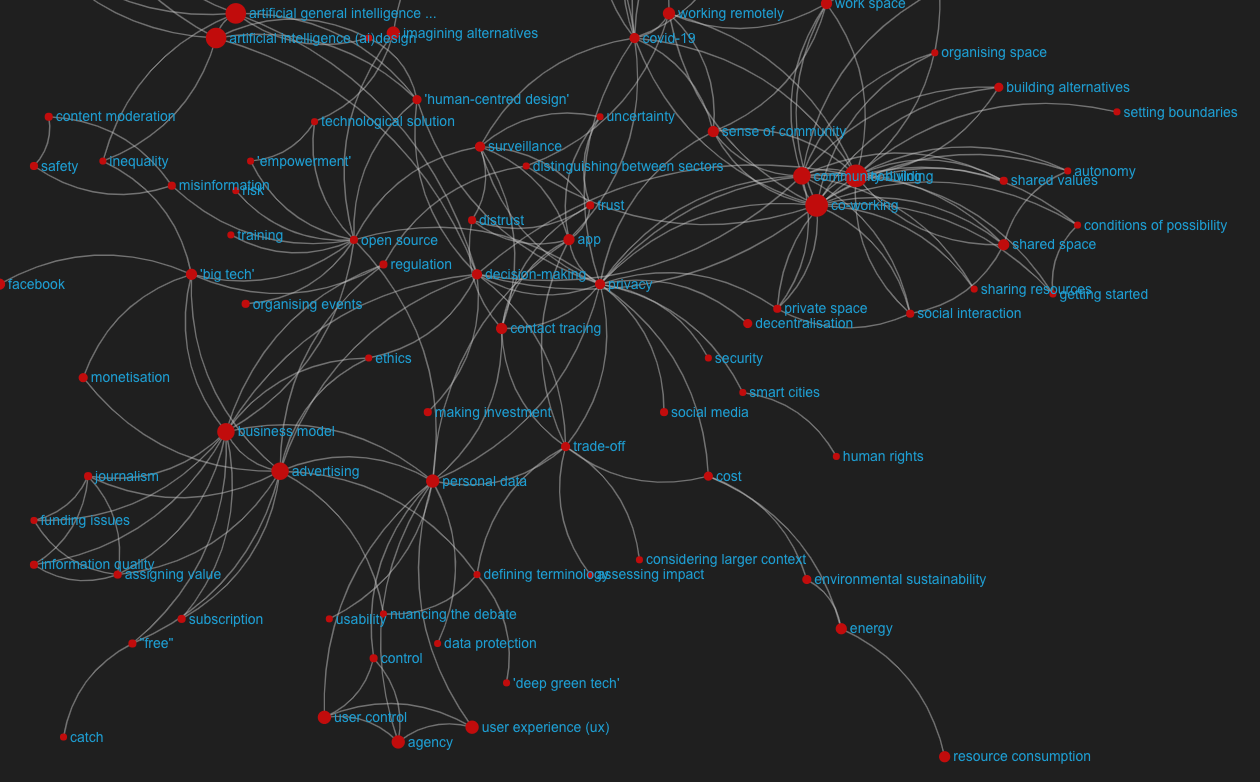
Let’s start with an overview of the conversation as a whole at k=4. This is everything that everyone is talking about across the NGI Forum.
 !
!
We can see some broad themes emerging as we look at the graph as a whole. Central nodes include codes like personal data, connected to codes like business model and advertising. From this personal data node, we get an idea of some of the issues community members are wrestling with.
If we follow the personal data code to advertising and business model to the left and trade-off to the right, we can see some very interesting debates emerging.
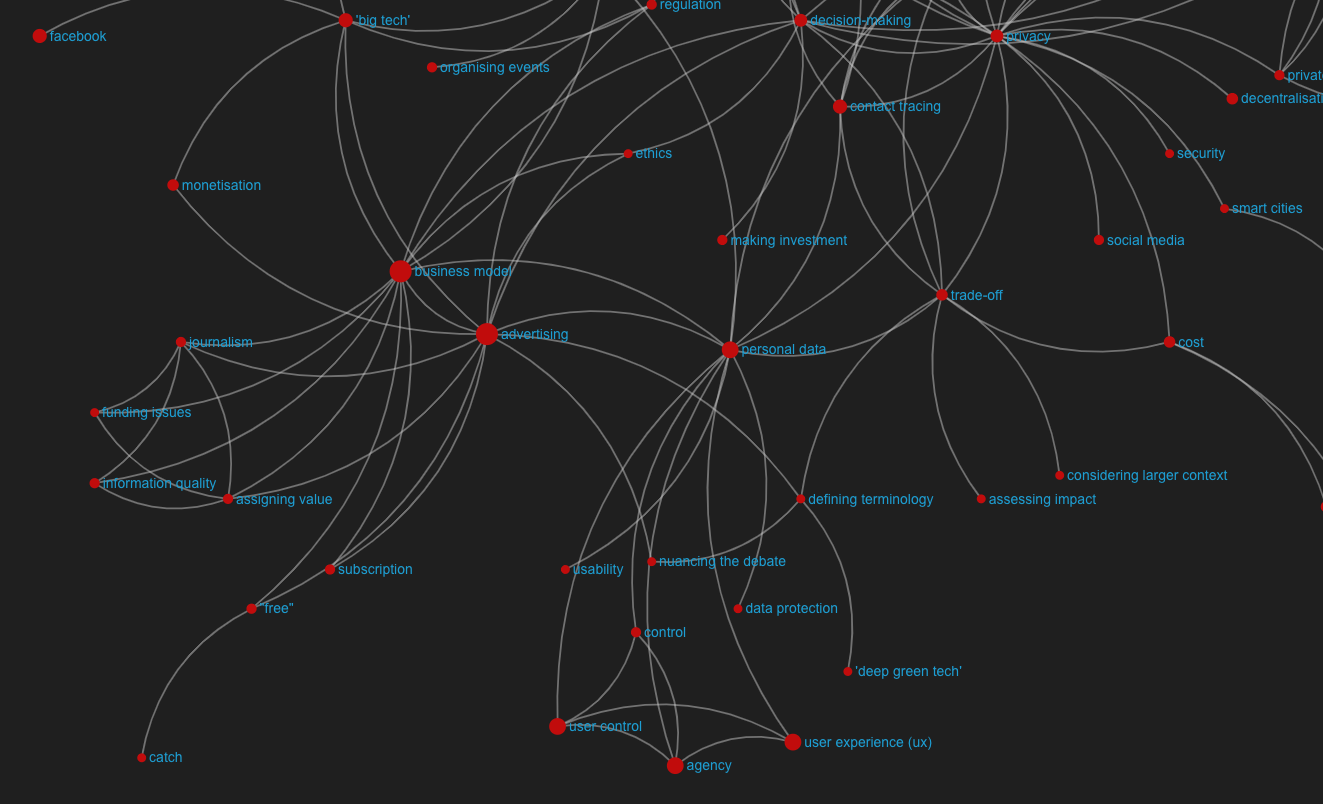
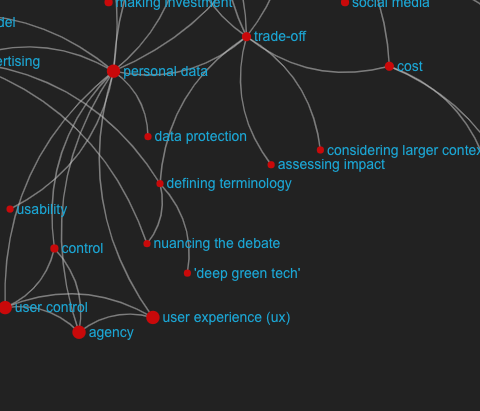
It’s clear even at this level that the use of personal data sets up a trade-off for a lot of participants. In decision-making about sharing or protecting personal data, community members are considering larger context around its use and assessing the impact of the trade-off. cost is also a key consideration. Personal data also connects strongly, if we move south, to agency, in a highly illustrative cluster with control and user experience. We see, again, trade-offs set up – between user control and user experience, raising questions about what one gets when one gives up personal data, and how much control is possible. Community members also raise questions about the effort and cost of controlling personal data in the current environment, when responsibility is highly individualised (individualising responsibility is a salient code at a lower level of co-occurrences).
Moving these abstract concepts into concrete examples, we can look at the left of personal data to see these applied to the specific case of advertising and journalism. Selling personal data for advertising creates revenue for journalism, without which there is an issue of information quality. But there are other potential business models to be considered outside of the selling of personal data, like subscription models. We can also see that community members understand that "free" access to services is not always actually free, since the catch is the selling of their personal data. Yet journalism, without a sustainable business model, is facing some serious funding issues. The fundamental problem is about assigning value to things like journalism, which opens to the question of how to fund it without shady advertising practices. These are all strongly connected to the question of ethics, a key concern in journalism writ large which is closely tied to ethical considerations around advertising, monetisation, personal data, and how to construct a sustainable business model.
Following the graph north, we can see business model and advertising also connected to monetisation and big tech. A series of issues around big tech have been outlined by the community – the need for regulation, the way it perpetuates inequality (facebook is a key example of big tech).

Alternatives to big tech emerge around open source, which has an interesting network built around it – questions of 'empowerment' (does open source empower users?), the need for training to use open source tools, and the question of whether using open source tools opens one up to increased risk. As a technological solution, open source also allows community members to imagine alternatives to the status quo. It also connects to 'human-centred design', as community members ask what exactly it would look like to design digital tools with and for humans.
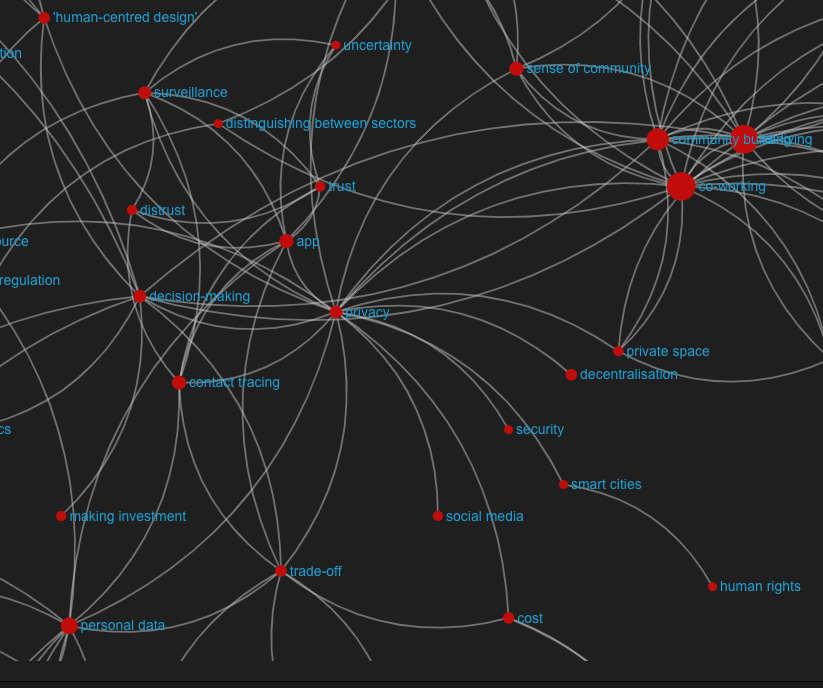
open source also strongly connects with privacy, an extremely central node in the conversation. privacy connects back to personal data, and we see an illustrative network of privacy concerns articulated by the community: around smart cities and human rights, covid-19 and contact tracing, and as aforementioned, trade-off and decision-making. A salient theme is the question of how to weigh up privacy trade-offs, in order to make optimal decisions about one’s own data privacy. What does it cost? There is uncertainty around how extensive surveillance is, and a distrust of the information that one is given about these technologies, which makes making quality decisions about these issues difficult for community members.
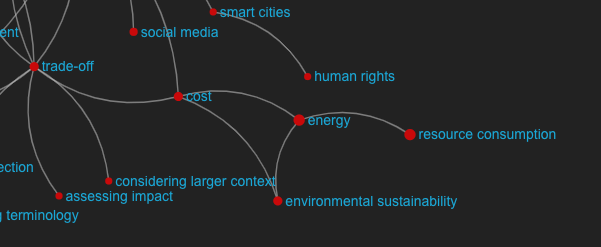
Also connected to ‘trade off’ and assessing impact is a series of environmental concerns. Moving to the bottom-right of the graph, questions of resource consumption and energy are tied to environmental sustainability and cost, showing us a snapshot of the rich conversation emerging on platform around technology, the internet, and environmental sustainability.
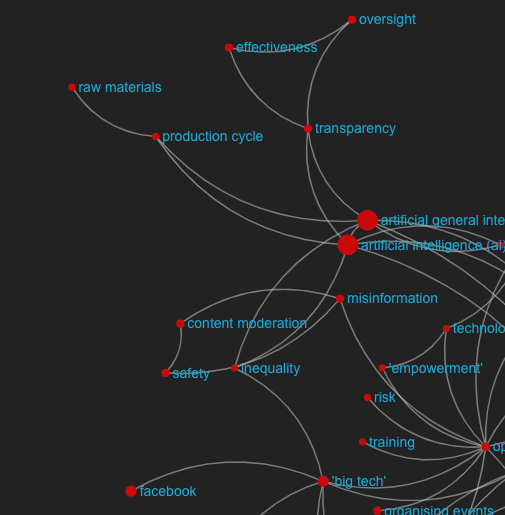
Returning to the topic of trust in technology, we see an interesting web of concepts emerging around artificial intelligence. AI is connected to inequality and big tech. It’s also connected to issues of transparency and oversight, as well as effectiveness. This cluster of codes tells us that there is an ongoing conversation around what kinds of oversight of AI might a) be actually effective, rather than performative and b) lead to increased transparency of AI and algorithms. We also see these connected to more concrete questions on what it takes to make these technological infrastructures: their production cycle and the raw materials needed.
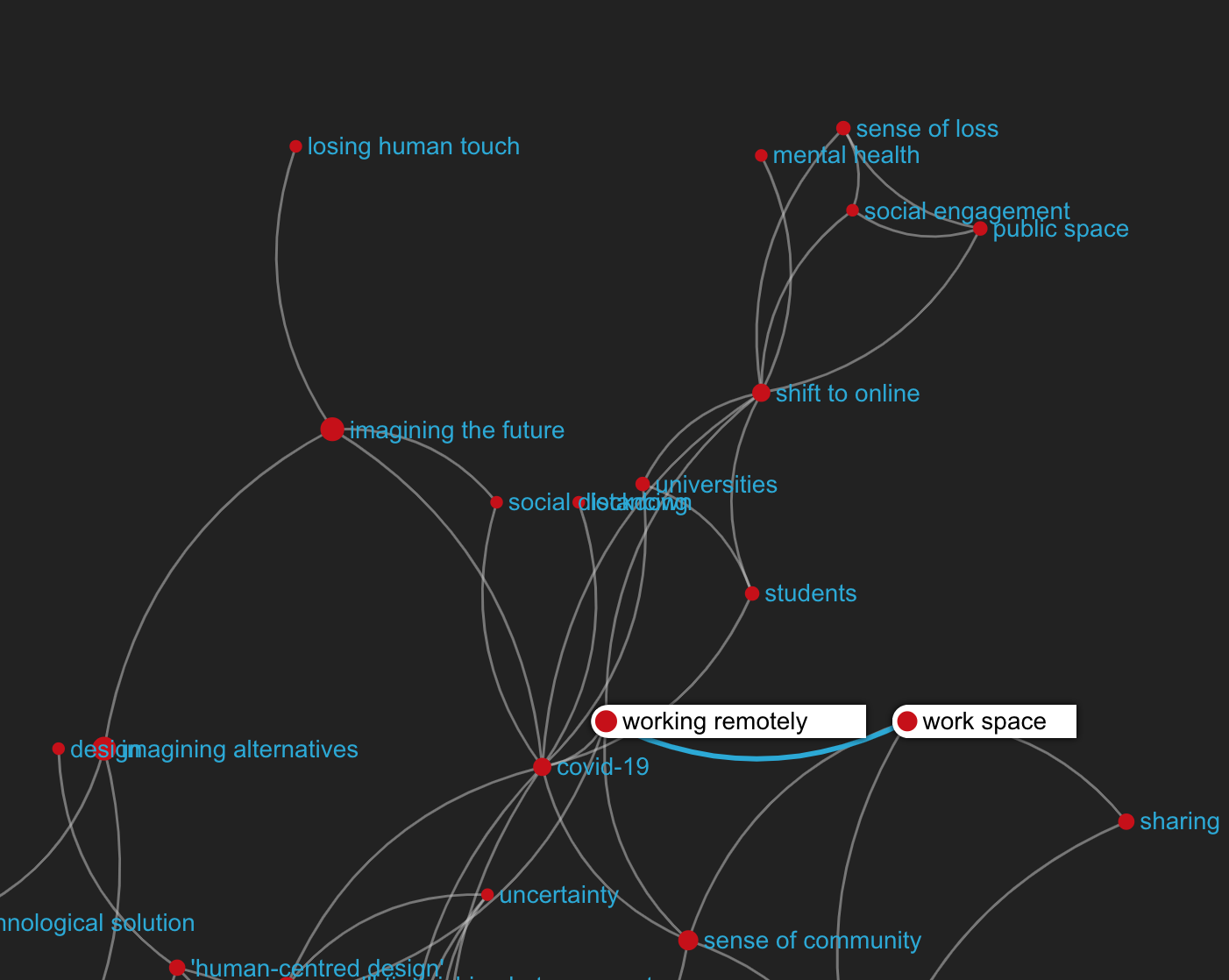
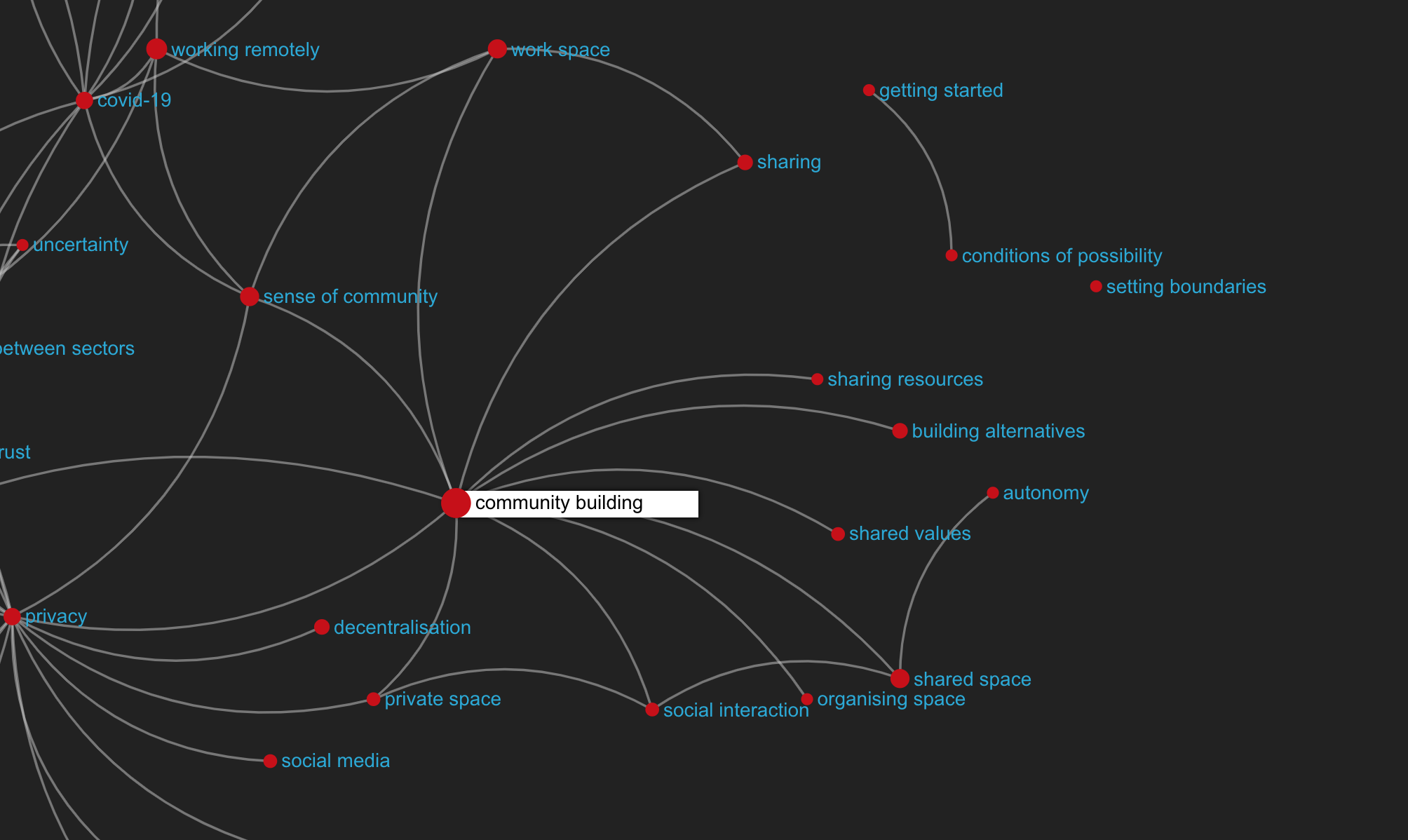
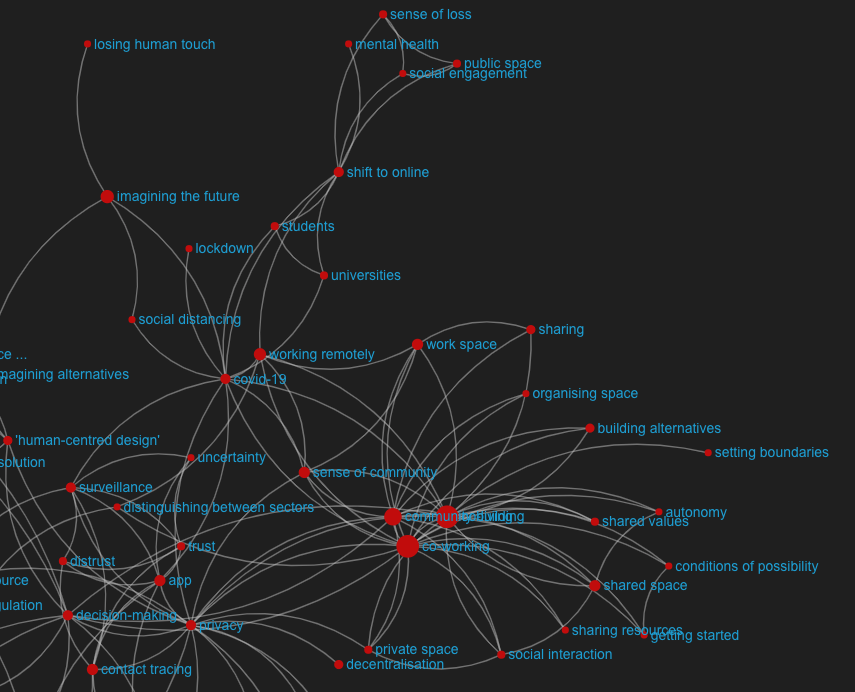
@katejsim gives a great analysis of co-working in the post above. I’d like to draw attention to the connections between the internet and online life and the concrete effects those have on life offline. We can see that covid-19 has lead to an increase of working remotely, perhaps unsurprisingly. But it has also lead to a shift of living conditions, particularly co-living and co-working, totally reshaping the division of public space and private space, leading community members to build alternatives and organising space differently.
Part of the impact of covid-19 has been a shift to online and a corresponding sense of loss, of public space, of social engagement, with mental health impacts. One way of addressing this has been to seek a sense of community by reworking offline spaces to increase social interaction. For students and universities, this is especially pressing.
A code I want to keep tracking is of defining terminology, as NGI community members try to cut to the heart of some of the bigger, buzzier issues in tech and the internet. 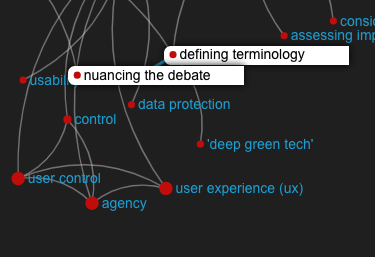
The code is meaningfully connected to nuancing the debate, telling us something about how to move forward and tackle the thornier, more challenging issues in this area in meaningful ways. I’m excited to keep seeing how these conversations unfold.