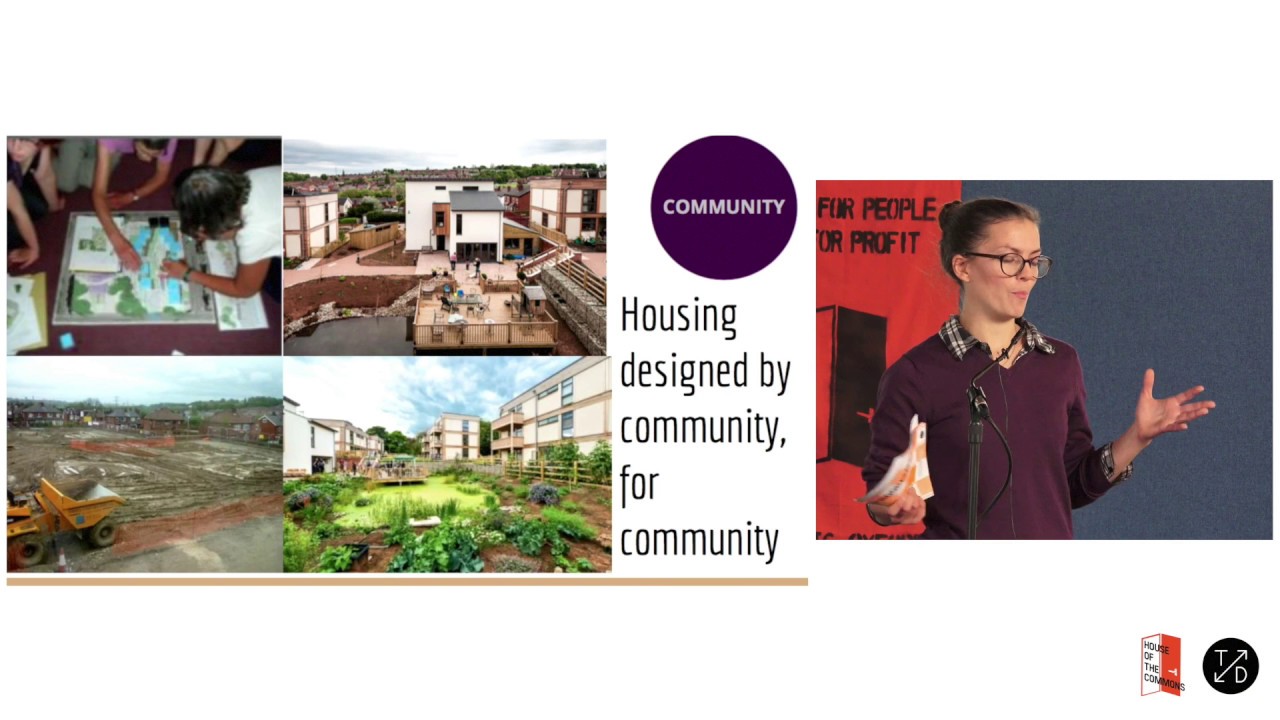
Thanks to Danny from Perennial I learned of a very interesting cohousing in Leeds, England. It’s called LILAC (Low Impact Living Affordable Community), and it bears a family resemblance to The Reef, at least to me. It’s based on the Danish model of cohousing; the scale is similar (20 units, 50 people against out projected 40); there is a similar attention to sustainability and community. Like us, they have substantial common spaces (including laundry and workshop), rooftop solar and rainwater captation to avoid contributing to flooding. They make it their business to support other cohousing groups by sharing their knowledge, they do open days etc – again, like we do. They are much better at making a splash though: just look at this 9-pages document of LILAC appearances in the press,TV, research reports. There is even a list of awards! This is the level of ambition I have for @reef-external :-).
But there are also differences.
- Technologically, LILAC is made of straw bale. How cool is that? They partnered up with a British company called ModCell, that produces this technology, and even received a government grant for being so sustainable. Straw bale is great for insulation and reduces the CO2 impact of the building across the life cycle. Also, it seems to have made their construction lighting-fast: they built the cohousing in one year.
- Much larger site: around 7,500 m2 to The Reef’s 1,600. What a luxury! They include allotments and their rainwater captation facility is an actual pond.
- This is because it is also less urban: it stands at 6 kms from the center of Leeds, where we are around 2 from the center of Brussels – a larger city. If we were at 6 kms from the center of Brussels we would be well outside of the Ring, deep into Flemish Brabant.
- Their financial and governance model is the Mutual Home Ownership Society, similar to a cooperative. Solidarity happens by making the Society, not the individuals, responsible for servicing the debt necessary to building the cohousing. This debt was taken on by the Society as one single loan, not by members individually. If I understand it well, everyone in LILAC paid up front 10% of the cost of their unit. Member households could, but did not have to, pay more: of course, every pound contributed by members from their savings reduced the amount of the loan. Those contribution bought equity in the society. This is somewhat similar to what we are doing now in Coral Reef, where one euro of contribution is compensated by the issuance of one share. In our case, shares are, only claims to the proceedings from liquidating Coral Reef, should that become necessary. In LILAC’s case, equity also entitles members to a share of the profits. Since LILAC charges rent, it will reasonably make a profit. I find this model great. You could argue it makes your investment quite illiquid, since there is no secondary market for the shares of housing coops. In practice, however, LILAC has a waiting list of households wanting to move in, so if anyone wants to leave it will be quite simple to liquidate. And, like in most cohousings, in practice no one is leaving!
- This model itself came from the ecosystem: it was invented by the New Economics Foundation, intellectual heavy hitters in modern economic thinking. The LILAC founding group agreed to being the first-ever cohousing to incorporate as a Mutual Home Ownership Society. Presumably, that meant first-rate free legal advice!
What I am learning from Perennial and LILAC is that British cohousings are more tightly woven into an ecosystem of mutual support than we are. For example, LILAC can only win awards if someone even organizes awards on sustainable living. The Brussels Region used to promote bâtiments exemplaires, but I don’t think that’s a thing anymore – the dedicated web page on the Environnement.Brussels webpage dates back to 2019.
Anyway, there’s work to do here if we are to build an ecosystem in Belgium or Benelux. I am most jealous of how they were able to partner with non- governmental actors: Modcell, a company, providing green building tech, and NEF, a foundation providing an innovative financial model. If you watch the video below, you can see how LiLAC provides ModCell with a “showroom site” associating the technology to the kind of sustainable living that clients of that technology aspire to. So, kudos to @Lee and @els for looking into Litoboxes
This is a sleek video with an overview on the sustainability aspect of LILAC.

And this is a much less sleek one, but warm and really recommended, on the financial model and the affordability stuff.