As I write this, I am in quarantine waiting on the results of my COVID swab. A housemate of mine tested positive two days ago (no symptoms, though), and we all had to get tested as a result.
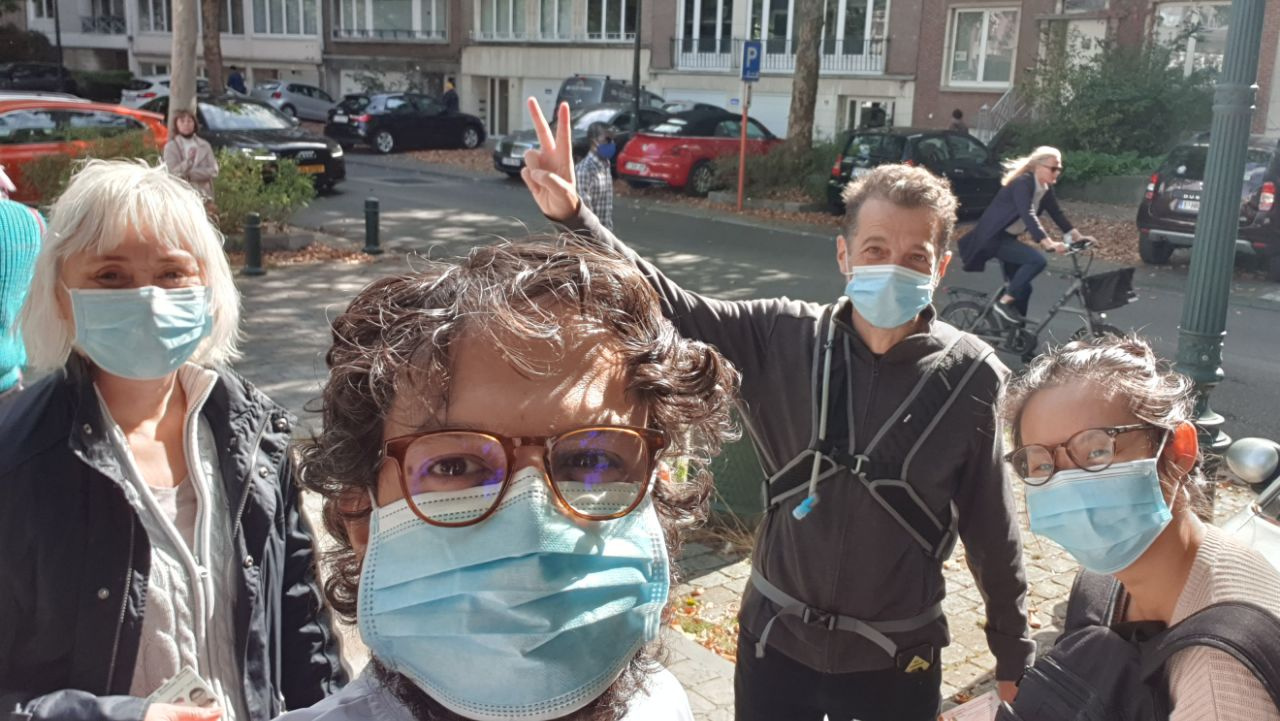
Here’s how it went. On Wednesday at 16.30 she received a call from the Track and Trace call center; immediately alerted us and went into isolation. We all quarantined ourselves on the spot. We then called the call center on Thursday morning, and they immediately generated codes that function as doctor’s prescriptions. With them, we could go to a test center (no appointment needed), and by 13.00 our swabs were done. By the end of the afternoon, we had established supply lines: several friends volunteered to do our groceries, the Arab shop next door agreed to deliver anything we order via Whatsapp. Additionally, we re-organized the house: we reserved some spaces (including a toilet) to the person who tested positive, made some new DIY hand sanitizer etc.
All this felt surprisingly peaceful and reassuring. I asked myself why, and – provisionally – I concluded that I like what is happening because it makes sense. This is the “test, track and trace” strategy that we were clamoring for in March, and suddenly here it is, and it works. The facilities are in place, and the community does not reject you as an infectious, dirty spreader, but is reasonably (and sometimes very) compassionate and supportive.
And this brought home how unsafe I have felt every time I saw obvious blunders in the whole COVID mess.
Policies with no scientific grounding make me feel insecure, because they reveal the agendas driving them. Exhibit A here is the Italian decision to forbid outdoors physical activity by people on their own. The Health Minister tried to object: doctors are always recommending people exercise more, especially the elderly, and forbidding them to walk seemed very bad for their physical and mental health (and it was). But the Interior Minister insisted: “if people can go out, how can I check that they are not violating the lockdown rules?”. This stuff scares me, because it shows the kneejerk attraction for control in many parts of the modern state. So strong, in fact, to trump the wellbeing of citizens. To protect our health, they make us ill.
A tragic symbol of this is a young Bruxellois called Adil: he and his friends were allegedly breaking the COVID imposition to gather in groups, so the police went to break up the gathering. And then they chased him on his scooter, until he crashed onto a chasing police car and died. To protect him from COVID, they killed him.
Politicians minimizing without knowing what they are talking about (like the Belgian federal health minister De Block at the beginning of the crisis makes me feel insecure, because it feels like there are no responsible adults at the steering wheel at a delicate time.
Paternalism and back covering (like the Italian prime minister Conte, continuously pushing the responsibility for fighting the pandemic onto the individual behavior of citizens) makes me feel insecure, because it creates “toxic community”: neighbors turning onto neighbors, accusing innocent runners of “endangering the community” by “not respecting the rules”. And I do not want to live in a toxic community.
Posturing officials (the nationalist/populist leader De Wever, mayor of Antwerp, who imposed a curfew on the city, and that way promoted his image as a tough, determined leader) make me feel insecure, because posturing does nor solve problems, and it rewards strongmen that could potentially make my life more miserable.
Ignorance and high-running emotions (see this funny-sad viral video of Italian mayors enforcing lockdown) make me feel unsafe, because the emotional stance is rhetorically powerful, and can kill any argument.
The sudden spike in appetite for surveillance in the wake of COVID makes me feel insecure. Again, the health argument is threadbare: some countries launched their respective magic COVID apps before having testing capacity. In this situation, all that the app does is surveillance, with very little effect on public health.
The horrible precarity in working conditions makes me feel insecure, because it has a huge impact on public health. People who are not paid to stay at home will risk working, try to hide their symptoms, and infect others – and this happened, for example in Germany.
I could go on, but you get the idea. The pandemic is a lens, that focuses trends in society. Some of these trends make me feel very insecure. They are the same I disliked before, but there is extra insecurity as I realize how weak the public sphere becomes when people are scared and exhausted.